Thomas J. Dodd Prize in International Justice and Human Rights
About the Dodd Prize
Thomas J. Dodd and the Purpose of the Dodd Prize
Thanks to the continuing efforts of Senator Christopher J. Dodd and members of his
family, in 2003, the University of Connecticut established a new endowment entitled
the Thomas J. Dodd Prize in International Justice and Human Rights.
The Thomas J. Dodd Prize in International Justice and Human Rights
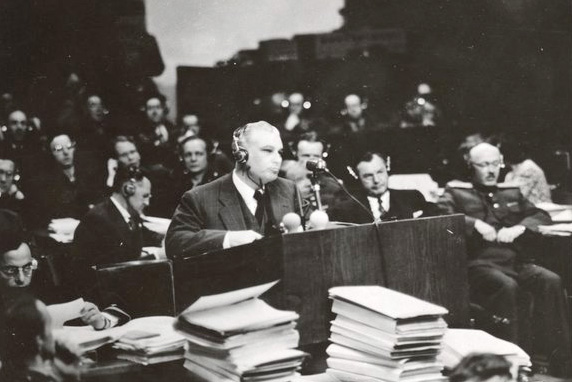
commemorates the distinguished career in public service of Thomas J. Dodd, who served as
Executive Trial Counsel at the Nuremberg Trials, as Connecticut Senator from 1959 to 1971,
and who fought against infringement and suppression of human rights in the United States and
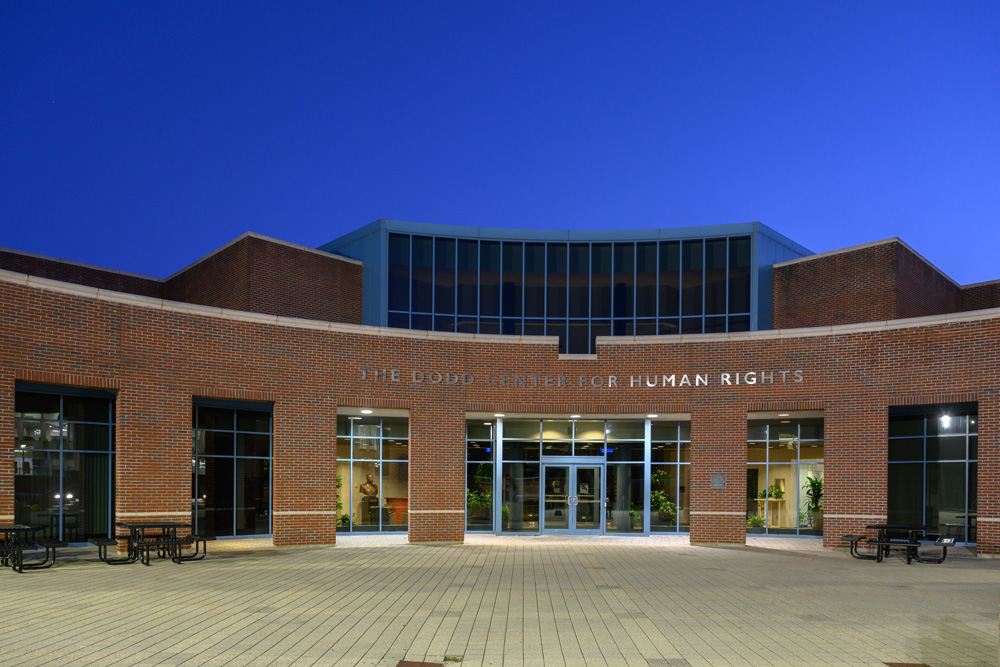
abroad. The prize is awarded by the Thomas J. Dodd Research Center at the University of
Connecticut to a leader or group who has made a significant effort to advance the cause
of international justice and global human rights.
For the occasion of the opening of the Thomas J. Dodd Research Center in 1996, a short film was produced from archival materials of the Nuremburg Trials and narrated by Walter Cronkite. View video
Award
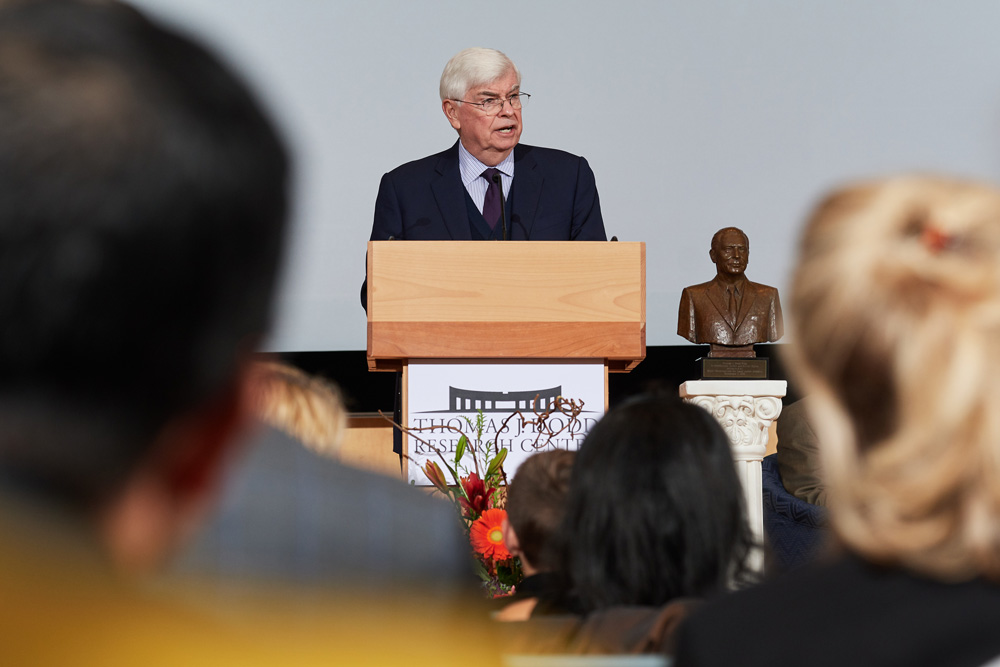
The individual or group receiving the award shall receive a
prize of $75,000, a diploma, and a commemorative bronze bust
of Thomas J. Dodd.
Pencil Sketch
We are indebted to artist Hans Weiss for the creation of the portrait of Thomas J. Dodd that
has become the face of the Dodd Prize.
Hans Weiss was born in Slovakia. At the end of World War II, he and his family escaped from
behind the "Iron Curtain" to West Germany and immigrated to the United States, settling in
Manchester, Connecticut. After arriving in the United States he took classes at the Hartford
Art School and also trained as a tool and machine designer. In 1963, Mr. Weiss began a small
manufacturing company, Dynamic Metal Products Company. The company expanded four times
within a span of 25 years and made a variety of products for the Apollo space program. At the
time he sold the company in 1989, it employed over 500 people.
While building his company, Mr. Weiss continued his interest in art. Following th sale of
his company, he became a full-time artist. He continued his art education at the Art Students
League in New York. In the last ten years he has produced approximately 700 paintings and drawings
and has participated in many exhibits and one-man shows in the United States and Europe. In 1995 he
created and donated his portrait of Senator Thomas J. Dodd, which now hangs in the Dodd Research Center.
In 2007 he donated a pencil drawing of Senator Christopher J. Dodd, which now proudly hangs next to
his father's portrait in the Center.
Endowment
The Dodd Prize would not be possible without the generous support of philanthropist
and businessman John W. Kluge. Kluge, who was born in Germany, immigrated to the United
States, and grew up in Detroit, Michigan. He graduated from Columbia University and served
in U.S. Army Intelligence during World War II. Kluge began developing his business empire
by first investing in the food business, then purchasing radio and television stations that
ultimately became Metromedia Incorporated, one of the largest communications conglomerates
with interests in radio, television, motion pictures, cellular telephones and the travel
industry.
Mr. Kluge has a wide range of philanthropic interests that include gifts to support minority
students at Columbia University, to the Library of Congress to establish a John W. Kluge Center
and support a Kluge Prize in Human Sciences and has donated land and his estate to the University
of Virginia.
Mr. Kluge began supporting the Dodd Research Center prior to its completion. He was closely
connected with Thomas Dodd because of their common interest in media and television. His initial
gift during the capital campaign for the Dodd Center established a fund for the Dodd Prize and
Mr. Kluge's additions to the endowment allowed the Center and the University to carry out the
first Dodd Prize event in 2003.
Mr. Kluge was the recipient of an honorary degree from the University of Connecticut in May, 2003.
This page is maintained by J. Nelson.
|